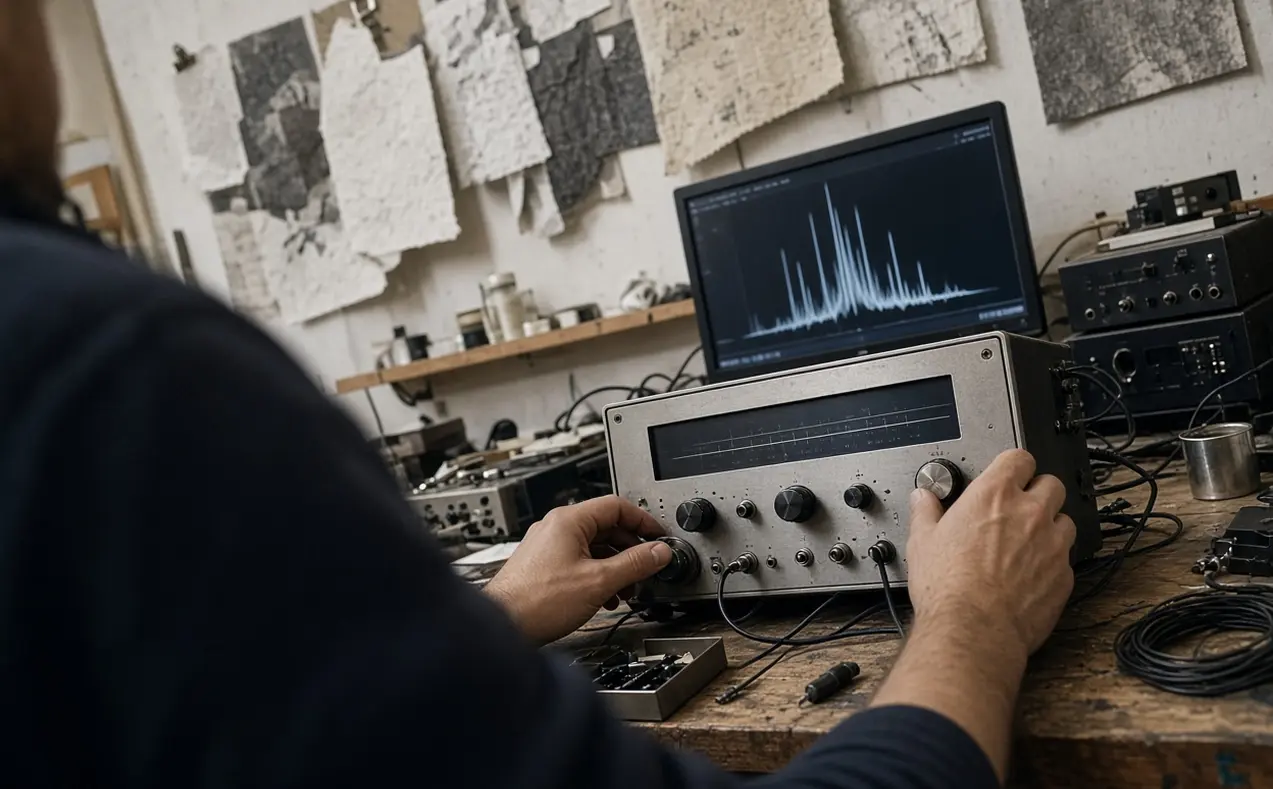
At 3:00 AM the pine plantation goes quiet and the air goes thick. The question I keep on the bench is simple and unforgiving: how do you hold a low-power FM rig on frequency, and keep it from shorting, when forest humidity hits saturation and the enclosure is already cooling?
What's Inside
- Why Do Field Transmitters Drift Off-Frequency After Midnight?
- Selecting Oscillator Boards, LiFePO4 Cells, and Polycarbonate Enclosures
- Potting the Circuitry and Sealing Coaxial Bulkhead Penetrations
- Dissipating RF Amplifier Heat Without Opening the Enclosure to Forest Air
- Run a 12-Hour Freezer-to-Bathroom Bench Test Before Heading to the Trees
Why Do Field Transmitters Drift Off-Frequency After Midnight?
Where I logged carrier frequency against enclosure-wall temperature through the shutdown cool-down, the first movement arrived before any droplet showed on the lid.
Remote woodland radio transmissions live inside a fast thermal swing. After dusk the plantation dumps heat. Air trapped in the box during a warm, humid assembly ride still holds water. A transmitter's heat cycle changes both surface temperatures and enclosure pressure. When a wall, a can, or a crystal can falls below the dew point of the air touching it, condensation starts on that surface. Saturated outdoor air, by itself, does not tell you the sealed interior has reached saturation. Log the inside.
The Log That Comes Before Sealant
Diagnose the moisture path before you choose a coating. On every overnight run I want four traces side by side: enclosure temperature, internal relative humidity, carrier frequency, and transmit on/off times. Compare the first frequency movement with cooling after shutdown. If the carrier creeps while the wall is still falling and the indicator card has not flipped, you are watching surfaces, not a leak.
Carrier Before DropletsMidnight carrier creep tracks cooling surfaces in the pine-box, not the absence of rain on the gasket. Thin moisture films change capacitance and surface leakage around oscillator tuning parts and crystal load networks long before standing water pools in the case. Crystal temperature sensitivity can move the carrier with a dry board. Separate those two mechanisms in the log or you will seal the wrong fault.
The installation is a 24-hour sonic intervention: unheard electronic music pushed into remote landscapes for whoever walks in to listen. A drifted carrier turns that pilgrimage into a hunt for a station that has already left the dial. Fix the physics on the bench. The trees will not debug it for you.
Selecting Oscillator Boards, LiFePO4 Cells, and Polycarbonate Enclosures
Pick the exciter from its frequency reference, lock indication, supply needs, and measured thermal behavior. A PLL-synthesized FM exciter ties the carrier to a reference and replaces a free-running LC tank for this kind of overnight sound art. That reference crystal still needs a temperature characterization. Record carrier behavior during warm-up and straight through the cold-to-humid transition. Lock light on, frequency still walking: the loop is doing its job and the reference is the thing moving.
Cells on a Cold Forest Floor
Choose the battery from discharge curves at the overnight temperature you actually expect, then size the enclosure around that pack. Lithium iron phosphate brings useful cycle life and a relatively flat discharge voltage, which keeps a low-power exciter from sagging off its regulator as the night goes on. Near freezing it is not a universal win over other lithium-ion packs. Read the manufacturer's cold-discharge sheet. Fit a battery-management system. Block charging below the pack's specified minimum temperature.
Charge FloorA LiFePO4 pack that accepted charge in the workshop can be damaged by the same charger on a forest floor near freezing. The BMS and a temperature lockout belong in the build, not in a note you remember at dawn.
Lead-acid still shows up in field kits because it is cheap and familiar. On a cold, damp floor its voltage sags under load and the exciter sees a supply that wanders. Use the curve, not the label on the case.
Polycarbonate That Stays Out of the Near Field
A UV-stabilized polycarbonate enclosure keeps a continuous metal shield off an internal or bulkhead-mounted antenna. IP67 and NEMA 4X are different classifications. Treat them as separate checks, then read the NEMA enclosure protection standards for what 4X actually claims about corrosion and hose water. The finished ingress performance is set by drilled penetrations, replacement gaskets, and any vent you add. A rating printed on an undrilled lid is a starting promise. Torque, O-ring seat, and vent choice decide what the pine plantation actually meets.
Polycarbonate gets the metal box out of the RF field. The battery, the wiring, the circuit ground, and wet vegetation beside the mast still pull the antenna. Retune after the pack is mounted, not on an empty shell.
Keep the whole architecture inside locally permitted short-range sound-art operation. Legality for an unlicensed transmission turns on jurisdiction, frequency, emissions, antenna arrangement, and measured field strength. The words "low power" do not settle it. The exposure this hardware is built for is shaded woodland damp and canopy drip.
Potting the Circuitry and Sealing Coaxial Bulkhead Penetrations
Dry and clean the board before any coating. Electronics-grade acrylic or neutral-cure silicone conformal coating is the layer I want on a serviceable exciter. Mask connector contacts, adjustment mechanisms, heat-transfer surfaces, and any openings the part maker flags. Apply and cure exactly as the coating sheet says. Full potting is a different process: it changes heat flow and makes the board hard to service after a failed overnight. For a temporary broadcast that has to come home and be opened, coating stays distinct from a poured block.
Cure the coating fully. Assemble in dry air. Then add desiccant. Seal a damp board and you have bottled the moisture load you meant to exclude.
Bulkhead, O-Ring, Wall
Drill the bulkhead opening with a stepped bit so the polycarbonate does not grab and crack. An N-type or BNC waterproof bulkhead needs a flat, clean seat. Compress the EPDM O-ring to the connector maker's specified torque. Extra turns distort the seal or split the wall. I have seen a hairline at the hole that only weeps after the second cold night.
Tape Over the Transition
Build the external wrap to the tape system's own sheet. Where that sheet calls for it, lay a removable PVC electrical-tape base. Stretch an overlapping self-amalgamating butyl layer across the connector-to-cable transitions. Finish with a UV-resistant outer wrap. Required stretch changes from one butyl tape to the next. Guessing the stretch leaves a spiral channel.
Braid CapillaryAdd a downward cable drip loop. Exterior wrapping stops water at the joint you can see. Water already inside a nicked jacket, or entering a wet cable end back at the mast, walks the braid under any tape you apply.
The Vented Pine-Box Boundary
A hydrophobic ePTFE vent interrupts the gasket suction that comes when the box cools and internal pressure drops. It resists liquid water. It also passes water vapor, so the interior is never a permanently dry volume on vent vapor exchange alone. Desiccant capacity and the dew point on cold surfaces stay in charge of what condenses on the oscillator. Mount the vent where canopy drip cannot pool on the membrane, and log internal humidity with the vent installed, not with the port taped over "just for the test."
Dissipating RF Amplifier Heat Without Opening the Enclosure to Forest Air
A wall that keeps forest air out holds the final-stage heat in. That is the thermal bind of a sealed sound-art transmitter. Dissipation in the RF amplifier is approximately DC input power minus delivered RF power. Regulator loss and oscillator loss add to the enclosure total. Name the device you are actually running, whether a small final such as a 2N3866 or something in the RD06HVF1 class, then measure it. A part number is not a thermal design.
Out Through the Backplate
Calculate the heat you must remove from measured input minus RF output. Verify the hot parts with a thermocouple while the rig is transmitting into a dummy load. Place a heat spreader on the amplifier's intended thermal interface. For heat that has to leave the box, use a gasketed metal backplate or a properly sealed thermal feedthrough, then reassess antenna placement around that metal. A large aluminum sink bonded only to an inner plastic wall spreads heat into trapped air. Couple the sink to a path that reaches outside air, or accept a higher case temperature and prove it on the log.
Closed-cell silicone on a solid aluminum backplate can carry heat outward without opening a breath path to the plantation. Thermal epoxy belongs on the interface the device maker specifies, in a thin, void-free layer. Thick epoxy is an insulator you paid to install.
On a 12-hour powered run, record amplifier case temperature, enclosure temperature, battery voltage, RF output, and carrier frequency. Estimate junction temperature from the device's documented thermal resistances and the mounting you actually built. A spreadsheet guess with the wrong interface resistance will bless a transistor that is already cooking.
Desiccant the RF Stage Can Bake
Size regenerable silica gel from the initial moisture load, the enclosure materials, gasket leakage, vent vapor exchange, and how long the special project stays up. Internal air volume alone under-sizes the pack once plastics and a vent are in the picture. Use the desiccant supplier's adsorption data and regeneration instructions.
Secure the packs away from the RF stage and away from exposed contacts. Heat shifts the gel's moisture equilibrium and cuts its drying effect. If the pack sits on the amplifier tab, a warm transmission can drive water back into the air you just dried. Set the replacement interval from indicator changes and from what you see when you open the box after the run.
Run a 12-Hour Freezer-to-Bathroom Bench Test Before Heading to the Trees
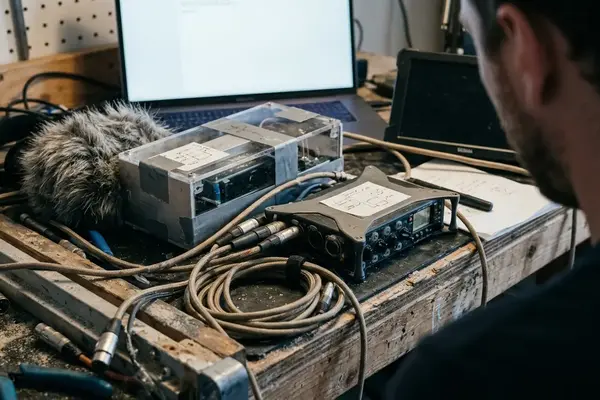
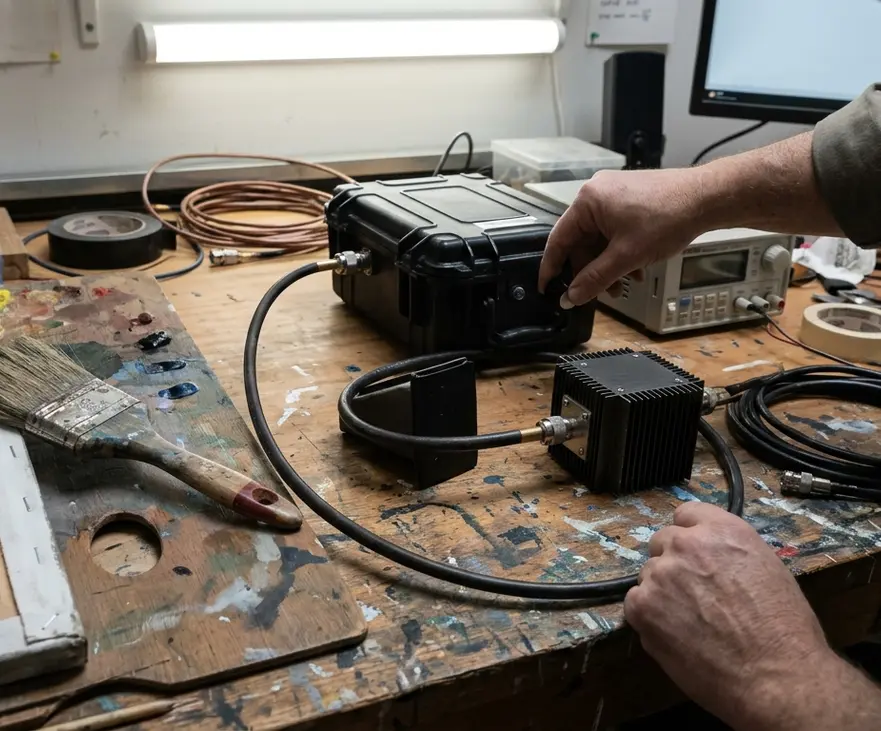
Start on a dry bench. Use a shielded 50-ohm dummy load rated for the transmitter's frequency and for continuous output at your level. Establish a frequency baseline and an audio baseline before any temperature swing. Many ordinary SWR meters go numb at micropower. Use a power meter that can see the actual output, and monitor through a correctly attenuated RF sample so the counter is not being cooked or lying.
Coatings and a well-made seal are built for condensation and heavy canopy drip. Shaded woodland damp is the exposure. Flooded peat and a clearing under direct sun sit outside this passive thermal design. Prove the rig against the exposure you will actually hike into.
Twelve Hours, Two Climates
Use a 12-hour validation window. Refrigerate the sealed assembly for two hours at approximately 4 °C. Check component and battery temperature ratings before you set that chamber. Then operate into the dummy load for the remaining ten hours, starting with the move into humid air.
Keep the transmitter and the instruments out of splashes and away from hot steam outlets. Run the humid leg on the battery, not on a mains supply sitting in condensate. Log the actual temperature and relative humidity. A steamy bathroom is a convenient humid transition. It is not a calibrated chamber, so the hygrometer reading is the data, not the fog on the mirror.
Fit a cobalt-free humidity indicator card with documented transition thresholds, visible through the lid. The card reports approximate relative humidity. It does not prove every board surface stayed above its local dew point. Zero drift is not a pass mark. A carrier excursion you declared before the test, reported with the instrument's resolution, is.
Seal the dry assembly with regenerated desiccant and that indicator card, refrigerate it for two hours, then move it directly into humid bathroom air while it transmits into the 50-ohm dummy load. Finish the logged run. Inspect the board in a dry workspace. Only then carry the installation into the trees.