The Silent Broadcast: Art Without an Audience?
Does a broadcast exist if no one tunes in? The premise of transmitting unheard avant-garde music into isolated environments treats the terrain as the first listener. The human visitor is merely an incidental witness. Opening transmissions operate as time-bound presences rather than traditional releases. They offer a single listening window, often after dusk or before dawn, with no public replay path.
The central operational condition is severe—the music is transmitted into a defined physical zone. Anyone outside the receiver range encounters nothing but rumor. This radical approach strips away the metrics of modern consumption. It demands physical pilgrimage.
Engineering the Ephemeral: Technical Implementation
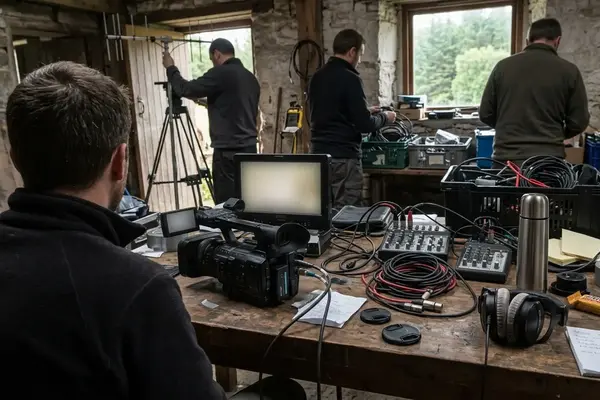
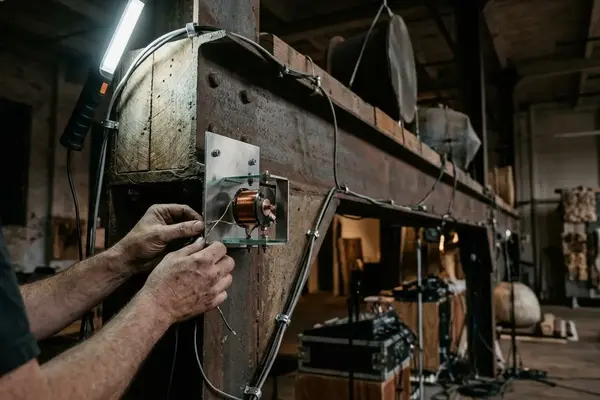
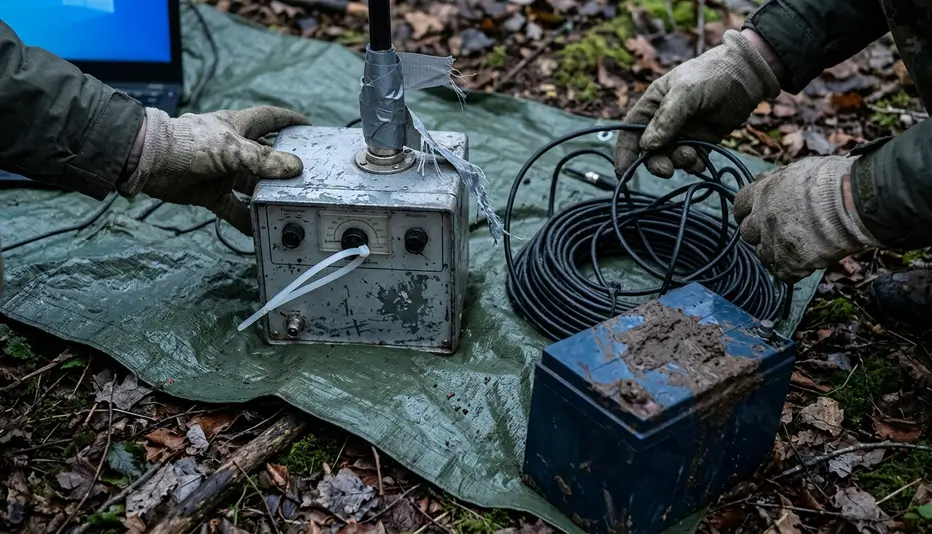
Engineering decisions begin with terrain rather than equipment. The site is walked first. Transmitter positions are chosen according to slope, tree density, access on foot, and where a modest signal can propagate. Remote setups rely on sealed battery power, short coaxial cable runs, and weather-resistant cases. Antennas are raised above immediate ground clutter rather than mounted for maximum spectacle.
In dense woodland, the useful listening area breaks into pockets. You might find a clear signal on a track, flutter at a bend, then total silence behind a ridge or stand of conifers.
Field Note: A practical site test usually happens within a day or two before transmission. Wet leaves, wind direction, and temporary access conditions drastically change the real reception map.
Case Studies in Isolation: From Concept to Cult Status
The evolution from small tests to cult-status gatherings required cautious enlargement. Early iterations proved that an unheard piece could be meaningfully placed in a remote signal field. Recent iterations trace a path from short-range trials in 2022 and 2023 toward deliberate forest-based listening routes in 2024 and early 2025.
In locations like the Galloway Forest Park, the physical environment actively shapes the acoustic experience. Trunks, wet canopy, low ridgelines, service roads, and parked vehicles dictate where the receiver holds, tears, or loses the signal. Reception checks are made by walking or driving the perimeter slowly. We stop at bends, clearings, high points, and dips rather than trusting a map radius.
Visual aesthetics do not translate to RF propagation. A transmitter placed in a visually dramatic hollow often produces a weaker experience than one hidden near a plain service track. The hollow traps the signal behind wet trees and rising ground.
The Archival Paradox: Scope and Limitations
The strict 'no recording, no archiving' rule is not an afterthought. It acts as a definitive curatorial boundary. The project preserves the fact of the transmission through logs, maps, artist notes, weather observations, and occasional photographs. A minimal archive records the date window, broad location, frequency band used, transmitter position, artist list, weather conditions, and reception notes. It never retains the transmitted works.
FM range enforces presence by making access physical. A listener must enter the signal field with a receiver. Moving a few hundred metres changes the work from full-bodied to fractured or absent. Critical review reveals that this spatial fragility is exactly what anchors the work in the present tense, aligning with broader academic frameworks of site-specific acoustic ecology.
While this methodology yields striking atmospheric results in remote woodlands, its reliance on specific topographical isolation makes it difficult to replicate in densely populated regions.
Important: Licensing, spectrum rules, land access permissions, and protected-habitat restrictions can override the artistic premise. Remoteness does not make an unauthorized transmission harmless.
Curating the Unheard: The Artist's Dilemma
Curation depends entirely on trust. The artist surrenders a work that may never become part of a catalogue, stream, or edition. A conventional open call was set aside in favor of direct invitations.
Submissions are assessed for how they behave through limited-bandwidth transmission. Dense low-end material, ultra-wide stereo gestures, and microscopic digital detail change dramatically over a small FM receiver. Artists deliver final audio one to three weeks before the installation. This allows the curator to test continuity, duration, and translation through the broadcast chain without turning the test into a public preview.
Community feedback confirms that ongoing partnerships with small experimental labels since 2022 work best when everyone accepts the premise. The unreleased track is not being withheld for marketing scarcity. It is placed into a one-time acoustic situation.
Applying Site-Specific Concepts to Your Own Work
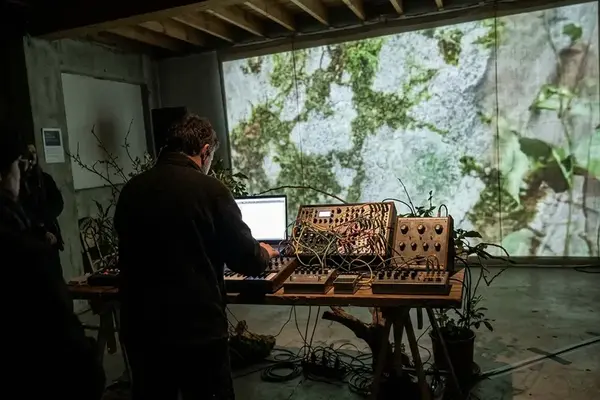
To adapt these concepts, begin by selecting a place before selecting a sound. Walk the terrain. Listen to its noise floor, identify where bodies can safely pause, and decide what the transmission should reveal about the space. A guaranteed clear signal is often less interesting than one that interacts dynamically with the topography.
An open moor, a conifer plantation, a coastal ruin, and a snow-covered access road will not merely host the same broadcast differently. Each environment changes the perceived rhythm, dropout pattern, and intimacy of the work. Visit the site at two contrasting times, such as late afternoon and after dark. Insect noise, wind, human traffic, and perceived isolation shift the work's emotional register.
Test with ordinary receivers alongside studio-grade monitoring. The project lives in the cheap radio, the car dashboard, the handheld scanner, and the listener's uncertain position.
Bottom Line: For future off-grid acoustic ecology, the meaningful shift is from broadcasting to an audience toward broadcasting into conditions. Prioritize soil, timber, mist, slope, distance, and the ethics of leaving almost nothing behind.