Are We Suffocating Sound in Sterile Spaces?
Why do we insist on experiencing wild, avant-garde electronic music in perfectly treated, deadened black-box rooms?
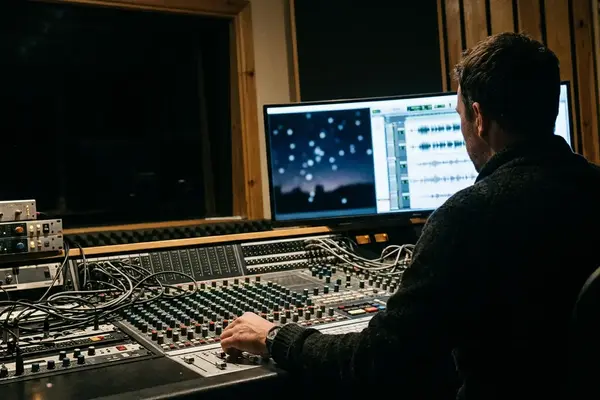
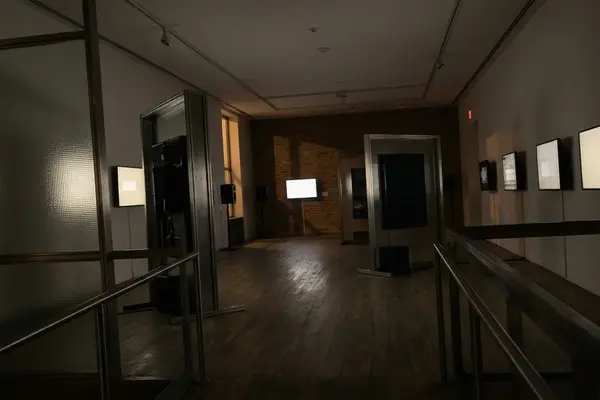
The black-box room is not neutral. It is a curatorial decision with absorptive walls, fixed speaker geometry, low spill, tidy cable runs, and a social contract that tells the listener to sit still and behave. That may suit some work. It also drains risk from music that was never asking to be polite.
The room has already edited the piece
A controlled gallery playback commonly fixes the listener between two or more loudspeakers. The chair becomes a measurement point. The body becomes an inconvenience. Long-form electronic works, especially pieces lasting roughly 25 to 60 minutes, suffer most under this arrangement because their force often comes from gradual perceptual drift rather than instant spectacle.
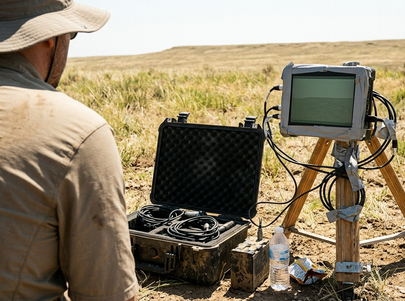
In a sealed room, that drift is mostly internal: attention, memory, fatigue. In a remote setting, the listener changes position, orientation, and distance during the piece. Wind alters the edge of a tone. Temperature changes the perceived bite of a high pulse. A tired walk back from a ridge can make a quiet carrier feel heavier than a subwoofer in a club.
Important: Treat the listening setup as part of the composition. If the work is placed in a deadened room, the curator has already made a strong aesthetic choice, even when the walls pretend otherwise.
Taking experimental audio out of the gallery and into the wild fundamentally rewires how it is heard. Not metaphorically. The ear has to negotiate weather, distance, ground, darkness, and the small panic of not being entirely in control.
Why the Untamed Environment is the Ultimate Amplifier
A remote setting does not merely host sound. It answers back.
This is where the useful language of acoustic ecology earns its keep: sound is not an object dropped into space, but a relationship between source, listener, surface, weather, and attention. A forest, ridge, basin, or shoreline has its own gain structure. It lifts some frequencies, smears others, and refuses to repeat itself cleanly.
Weather is not background noise
Wind patterns become part of the live mix. Topography decides whether a pulse arrives as a blunt hit or a delayed shimmer. Atmospheric pressure can make a transmission feel strangely close one evening and thin the next. The question should not be whether a site gives a clean reproduction, but what the place does to the material.
A shallow valley can return audible reflections after the direct sound. Dense canopy and wet ground tend to soften high-frequency detail more than dry open scrub. A rocky basin may exaggerate reflection and low-end presence, while an open moor may hand the faders to the wind.
Scout the site more than once
The strongest sites rarely announce themselves at noon. Pre-dawn, late afternoon, and after dark often reveal different noise floors, bird activity, insect density, and wind behavior. One visit produces a postcard. Several listening periods produce a score.
Natural reverb from a valley or forest canopy can outperform digital emulation because it does not flatter the artist. It resists. It arrives with mud, branch movement, damp air, and the uneven attention of a listener trying to hear through weather.
Field Note: A site with less visual drama may produce the richer listening encounter. Dramatic scenery can seduce the eye while doing very little for the signal.
Debunking the Need for Acoustic Perfection
The audiophile counter-argument deserves a fair hearing: pristine, isolated conditions can be necessary when the artist's intent depends on exact stereo imaging, forensic detail, or calibrated multichannel placement. In that case, the sealed room may be the appropriate instrument.
But much experimental sound does not aim for immaculate delivery. It aims for encounter. Drift. Friction. The little violence of hearing something unstable in a place that refuses to become a container.
Intent changes the standard
If the work is built around precision playback, acoustic perfection has a clear job. If the work is built around uncertainty, the pursuit of perfection can become a kind of censorship. It removes the very disturbance the piece is trying to activate.
Traditional venues often compress the experience into a scheduled entrance, a fixed listening posture, and a predictable exit. The listener consumes. The room behaves. Everyone leaves by the same door.
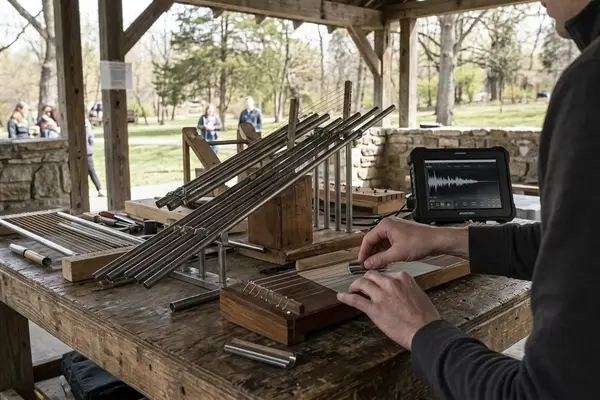
Remote listening changes the contract. Walking, waiting, retuning, and choosing where the piece is heard become part of the work. For bass-heavy or textural electronic material, the difference between standing on exposed rock, moss, sand, or snow can be felt physically before it is described technically.
The listener stops being passive
A gallery seat asks for attention. A remote broadcast demands decisions. Move closer or stay still. Climb to the clearing or remain under the trees. Tune for steadiness or accept the grain. These choices do not dilute the work; they expose its edges.
This argument has limits. It weakens when the primary compositional language depends on microscopic detail, exact spatial placement, or a calibrated system that would collapse outside the room. Not every piece wants the hill. The mistake is assuming none of them do.
Bottom Line: Acoustic perfection is not the same as artistic truth. Sometimes the truer encounter begins when the room stops protecting the sound.
Site-Specific Transmission: When the Forest Becomes the Receiver
The practical work starts backward from the listener's journey, not forward from the equipment list. First comes the terrain: a path, clearing, ridge, bend, or dead-end track where reception can fade, return, and misbehave with purpose.
Plan the walk before the broadcast
A useful temporary setup can be simple: a low-power FM transmitter, battery supply, weather-sheltered audio source, simple vertical antenna, printed tuning instructions, and handheld receivers carried by listeners. The equipment matters, but the route matters more. A bland signal in a cinematic landscape becomes decoration. A shifting signal in an unassuming tree line becomes an event.
Useful terrain features include a bend in a trail, a tree line, a saddle between two rises, or a clearing where the listener can hear the radio signal shift while moving only a few meters. These are not scenic extras. They are compositional tools.
Run the signal walk
- Choose the listening route before final antenna placement.
- Set the transmitter position and keep one person monitoring it.
- Send another person through the route with a receiver.
- Log where the signal blooms, distorts, thins, or disappears.
- Adjust the antenna or listener instructions only after walking the whole path.
Field setup usually needs a same-day signal walk lasting something like 45 to 90 minutes. Planning should allow a 2 to 4 hour installation window for transport, antenna placement, weatherproofing, test transmission, listener arrival, and teardown — timings drawn from running these broadcasts in the field. Those numbers are not glamorous, but they keep the ritual from becoming chaos.
In practice, receiver choice also changes the work. A listener carrying a cheap pocket receiver may experience the piece as unstable, grainy, and haunted. Another using a more selective receiver may hear a steadier but less fragile version of the same transmission. Neither version is automatically superior; each reveals a different edge of the broadcast.
Important: A remote broadcast can collapse into novelty if the site is chosen only for dramatic scenery. Without meaningful signal behavior, the landscape becomes a backdrop rather than a collaborator.
Rewiring Our Auditory Perception in Isolation
Isolation is not emptiness. It is a reset of the ear.
Urban listening carries a residue: engines, HVAC drones, traffic wash, phone speakers, social noise, the constant defensive filtering that makes a city survivable. Walk far enough from that field and the body does not relax immediately. It scans harder.
The first minutes are rarely quiet
Listeners often need an adjustment period after arrival. The first 10 to 20 minutes can be dominated by footsteps, breath, clothing noise, and the nervous attention that comes with darkness or distance. That restlessness is not a problem to solve. It is the threshold of the work.
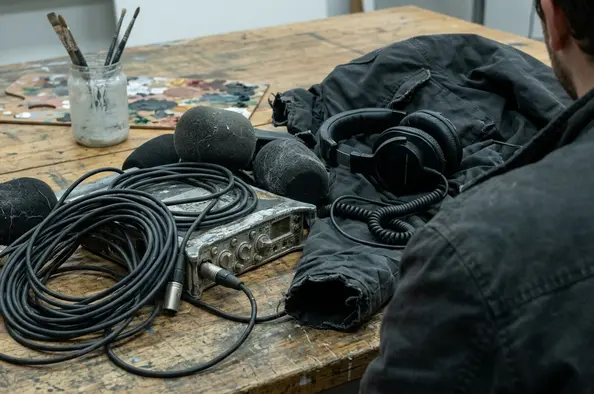
Then the scale changes. Carrier hiss stops sounding like a technical flaw and starts behaving like weather. Distant low-frequency pulses feel less like bass and more like pressure moving through the ground. Branch movement, receiver handling, and the small instability of tuning become part of the perceived composition.
Let the dark outside do its work
Many field curators learn this quickly: the emotional weight of unheard electronic music increases when the listener has had to arrive with the whole body. The walk matters. The waiting matters. The slight uncertainty about where the signal is strongest matters.
This is not a rejection of studios, galleries, or careful playback. It is a refusal to let them become the only approved frame for serious listening. Some sounds need insulation. Others need rain on the hood, wet ground underfoot, and a receiver slipping in and out of certainty.
Sound artists should risk the unrepeatable more often. Listeners should abandon the safest seat occasionally and meet the work where the landscape can argue back. The dark outside is not a venue waiting to be civilized. It is an instrument already playing.