What Happens to a Composition When the Transmitter Goes Cold and No Tape Is Rolling?
How does an electronic composition survive inside a listener’s mind when no master file, archive, or recording exists to verify it?
Our special projects operate on a strict, linear sequence: we receive an original audio contribution, transmit it once via a restricted-service FM event into remote country, and permanently delete the source audio. A standard transmission runs for 24 hours. During that window, the operational log separates three distinct milestones: transmission start, transmission end, and deletion completion. A finished broadcast never automatically establishes that its source files have been removed; the erasure requires its own verified execution.
Most contemporary sound art & experimental releases rely on infinite replayability. Listeners scrub backward to dissect a transition or leave a track looping in the background while distracted. Stripping away the scrub-bar alters the stakes of reception. When a listener parks on a dark forestry road to catch a 24-hour broadcast—knowing their individual listening window is only a fraction of the total transmission, they must decide in real time what deserves their attention. Without a replay button, the ear shifts from passive consumption to active, high-stakes registration.
Methodological note: The reflections that follow represent interpretations of unsolicited listener correspondence and handwritten field logs rather than controlled memory research; because raw correspondence archives remain external to this text, specific listener experiences stand as claims to substantiate through future field protocols rather than established empirical findings.
How Listener Testimonies Diverge from the Original Broadcast Logs
Evaluating how a vanished broadcast mutates requires isolating a listener’s smallest identifiable claim: a specific remembered sound, its apparent duration, and where it seemed to originate. We then locate the corresponding interval in the handwritten studio transmission logs to separate agreement, contradiction, and details the paper record cannot resolve.
Where archived studio notebooks document the schedule, only basic track transitions, local weather observations, and FM signal-strength readings at the broadcast site survive. They do not preserve a continuous record of the actual acoustic wave reaching each remote car stereo or portable receiver.
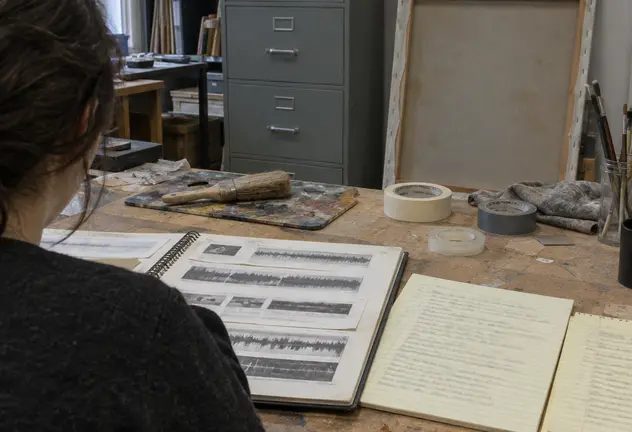
This gap produces what we call the silence-to-movement breakdown: a listener remembers an uninterrupted composition across a paper-log interval containing no programmed audio. A multi-hour gap marked in the notebook as dead air or unmodulated carrier wave frequently returns in correspondence years later as a dense, continuous musical movement. That mismatch concerns the transmission schedule alone. Wind across an antenna, receiver circuit noise, and distant forestry machinery may still have been audible inside the listener's cabin.
Similarly, psychoacoustic blending regularly fuses the environment with the broadcast. When a testimony describes a percussion track resembling "rain on a vehicle roof," the analyst must preserve the listener’s exact wording and check whether the studio weather log records precipitation during that exact interval. Even then, rain at the transmitter never establishes rain at the listener’s parked vehicle miles away up the valley. As Frederic Bartlett demonstrated in his foundational work on the reconstructive nature of human memory, recall seeks narrative coherence. The mind routinely binds ambient environmental sound, static interference, and intentional studio synthesis into a single remembered composition.
Why the Refusal to Archive Generates Collective Folklore
When two people compare notes years after an unrecorded radio transmission, neither possesses an authoritative reference file to prove the other wrong. Discrepancy hardens into shared acoustic myth.
We can trace this evolution by following a remembered passage as it moves between correspondence. One person describes an eerie vocal loop heard near midnight; a second listener supplies a track title or scenic setting; a later retelling combines both accounts into a single unified event. Preserving the exact chronological sequence of correspondence is essential so that shared folklore is never mistaken for independent corroboration.
Consider the hypothetical case of a phantom track at 3:00 AM on a mountain pass. Listeners occasionally swear they heard an intricate synth piece during the dead of night where the studio queue shows nothing scheduled. When an alleged piece has no matching queue entry, it must be categorized as an unmatched recollection. This defines the cold-transmitter boundary: a surviving cue sheet can document a 3:00 AM queue gap, but cannot reconstruct what a particular receiver made audible on the mountain pass. The paper queue alone cannot determine whether the sound originated from distant co-channel station skip, receiver intermodulation, hypnagogic perception, or an accidental omission by a tired studio operator. A paper transmission record stays fundamentally distinct from an audio archive; it proves a scheduled transition occurred without allowing anyone to hear that transition again.
The Zero-Backup ImperativeEarly in our transmission experiments, we considered keeping a concealed studio backup for legal or research verification while telling the public the files were gone. We abandoned that approach immediately. A secret archive gives the broadcaster a hidden reference object while leaving the public in artificial uncertainty. If a private tape exists, the psychological tension collapses for the operator, turning a genuine ephemeral sacrifice into a theatrical stunt. True deletion is required for the work to function.
Running Your Own Zero-Archive Broadcast and Recall Study: A Step-by-Step Field Protocol
Sound artists and experimental collectives can investigate these memory mutations firsthand by running a controlled, zero-archive transmission. The following blueprint details a complete 24-hour field run and six-month recall study that you can replicate step-for-step.
Step 1: The Hardware and Deletion Chain
- Secure Permissions and Consent: Obtain the required restricted-service or low-power FM broadcast authorization for your remote site, alongside signed artist consent forms explicitly authorizing the irreversible deletion of their submitted audio files immediately after broadcast.
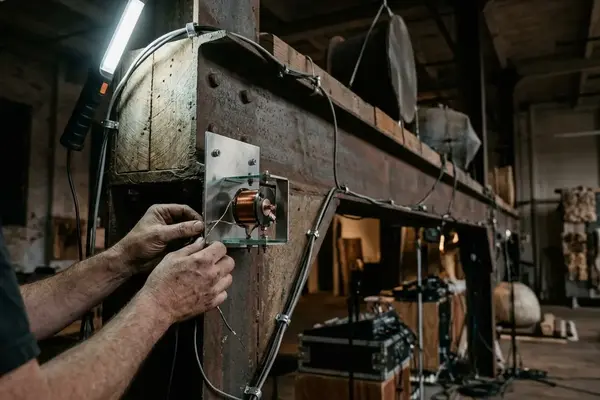
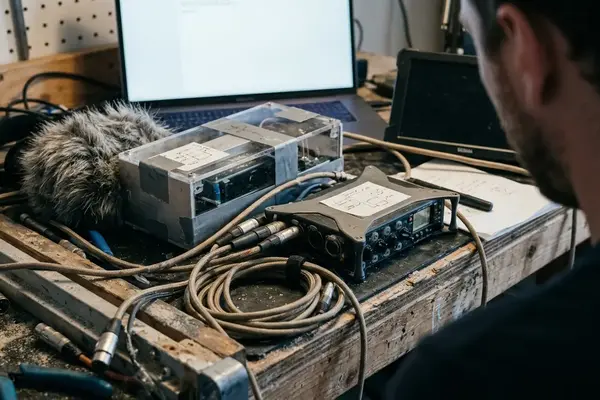
- Configure Volatile Playout: Route your audio into an authorized low-power FM transmitter or localized induction loop from a single hardware playback unit. Configure the system to run entirely from volatile RAM (tmpfs) with all internal recording, swap files, and persistent storage disabled.
- Execute and Log Erasure: Run a 24-hour broadcast where each contribution plays once. Trigger an automated bash script upon playout completion that overwrites the memory address, clears the hardware playback buffer, and severs access to the source directory. Log the exact second of deletion completion as a separate operational event from track completion.
Step 2: The Structural Cue Log
- Establish Time and Frequency Standards: Maintain a paper-only master log using timestamps with seconds and an explicit time zone (e.g., UTC). Label all acoustic descriptors as production measurements taken at the mixer output, never as claims of what listeners actually heard in the field.
- Record Standardized Entries: Write entries following this exact structural model: 02:14:08 UTC — 60 Hz fundamental beneath broadband high-frequency sweep; rain begins at transmitter tent; local monitor signal reading recorded.
- Document Receiver Telemetry Properly: Whenever logging FM signal strength, record the exact receiver model, the physical measurement location, and the displayed units (such as dBµV). Remember that a transmitter-site meter reading never measures reception quality at a distant mountain pass.
Step 3: The Six-Month Postcard Recall Protocol
- Distribute Coded Postcards: Hand out physical response postcards to listeners arriving at the site perimeter. Assign each card an anonymous alphanumeric tracking code and print a target calendar return date set exactly six months after the broadcast closes. Log the exact distribution date and the actual postal arrival date for every returned card so intended delay and actual recall delay remain distinguishable.
- Print Non-Leading Prompts: Avoid suggesting specific acoustic phenomena, never mention drones, rain, or phantom tracks in your questions. Print only these three prompts on the card:
- "Describe the sounds you remember, in whatever order they return."
- "Where were you, and what else could you hear around you?"
- "Which details feel certain, and which feel uncertain?"
- Audit Testimony Against the Paper Log: When postcards return six months later, score each description against your paper cue sheet across four strict criteria: remembered sequence, perceived duration, sound quality, and attributed source. Preserve all unmatched passages verbatim in your published findings rather than forcing or rewriting them into the nearest logged studio cue.