What Does It Sound Like to Leave the Solar System?
The opening frames silence as a false promise. Beyond the solar wind, there is no air to carry sound. Yet the region is not mute when electromagnetic activity is treated as material. Blues of the Heliosheath is a site-specific sound-art project that draws its tension from this exact boundary region. The heliosheath and nearby interstellar medium are defined by charged particles, plasma oscillations, and the absolute absence of breathable acoustic space.
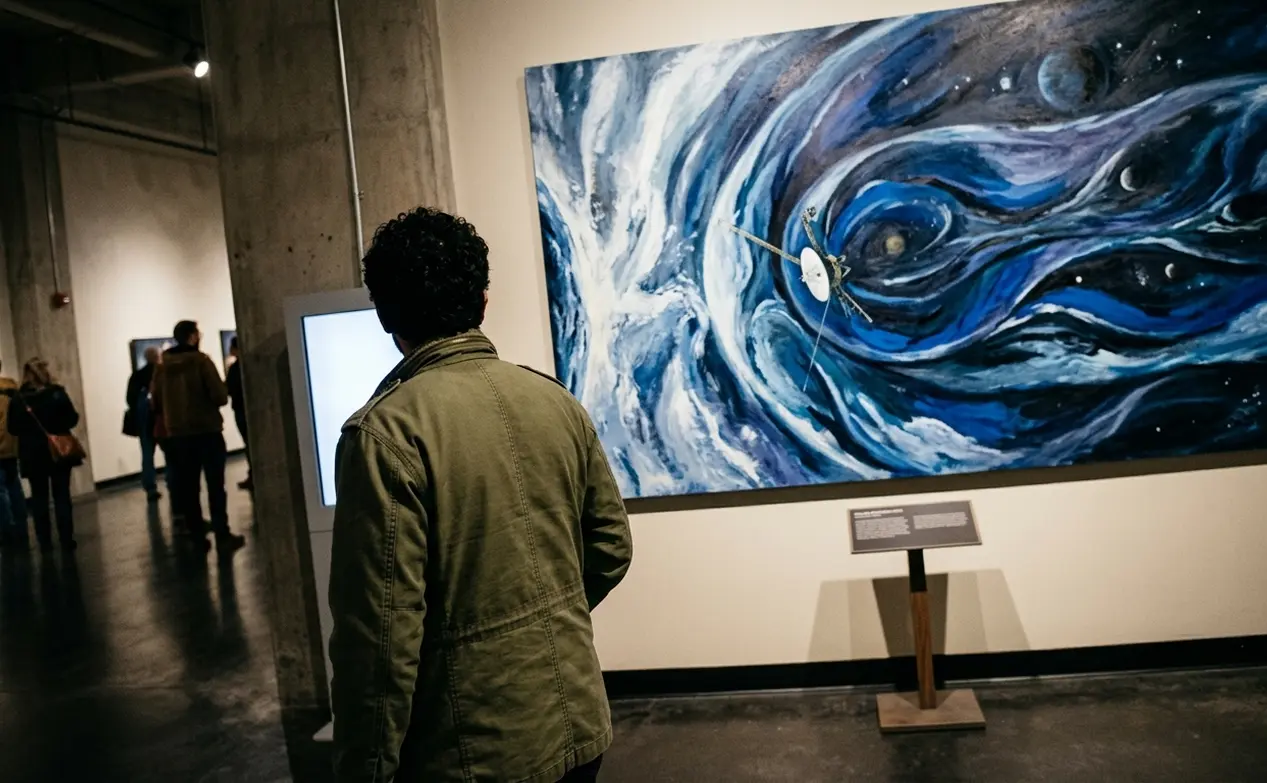
Voyager 1 is now beyond the heliopause, at a distance of something like 160 astronomical units from the Sun. Any reference to its position becomes a problem of delayed contact rather than real-time presence. We are listening to ghosts of telemetry. The sheer distance isolates the probe, turning its faint transmissions into a profound study of remote existence.
Translating Interstellar Plasma Waves into Audio
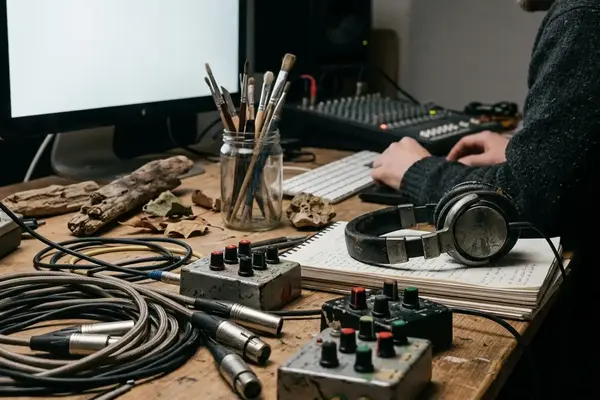
The artist treated the telemetry as a score with constraints, not as raw decoration. Plasma-wave traces were first reduced to contour, spike density, and sustained bands. The audible composition keeps the recognizable narrow-band character of Voyager 1 plasma wave subsystem (PWS) data by using sustained tones, slow beating, and thin frequency clusters rather than dense harmonic pads.
Radiation-like spikes are rendered as brief electronic abrasions, gated bursts, or clipped transients. Calmer intervals become long, almost static drones. The data-handling strategy here is editorial rather than forensic. The temporal order of notable features is preserved, but the amplitude and timbre are shaped specifically for outdoor audibility.
Field Note: Treating plasma data as a novelty sample pack would erase the project’s central tension between measurement, translation, and distance.
Site-Specific Transmission Constraints and Limitations
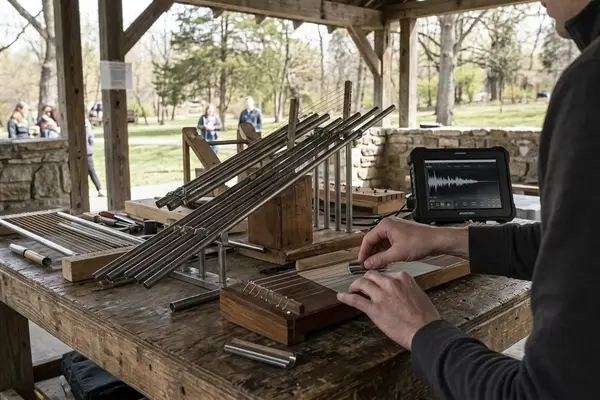
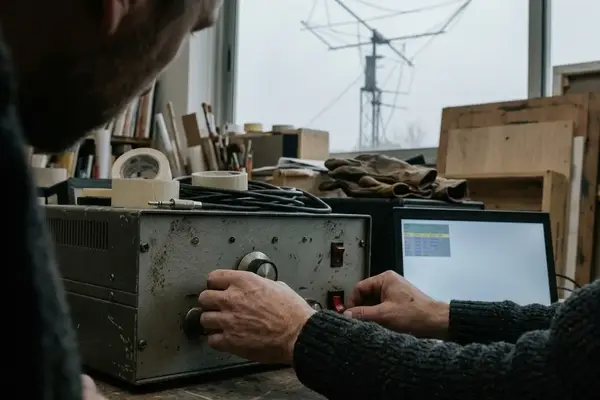
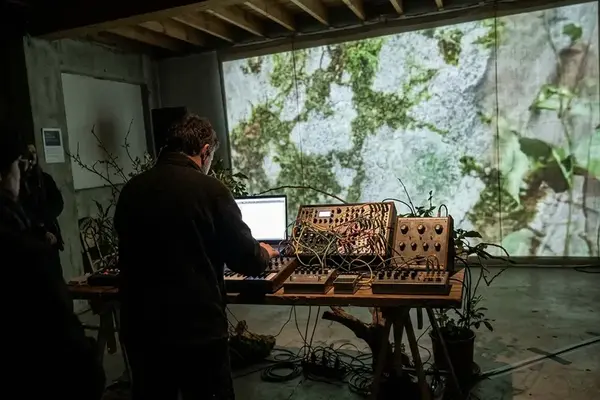
Off-grid deployment requires a compact transmitter chain, battery power, weather protection, and a playback source stable enough to loop the composition without mains electricity. Early attempts to broadcast pristine audio files failed against the reality of the terrain. The installation now lets dropouts, hiss, antenna orientation, terrain shadow, and receiver drift become active compositional elements.
The broadcast design accepts fragility as part of the work—a necessary concession to the terrain. The most plausible listening condition is short-range FM reception with a portable receiver. Line of sight, antenna height, and the listener's walking position physically alter the mix. Atmospheric noise, nearby terrain, and receiver quality can make the same passage feel clean at one listening point and partially erased a short distance away.
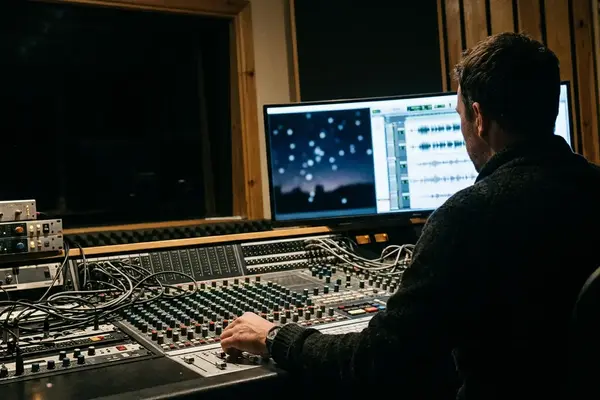
Important: The piece loses much of its site-specific force when heard as a clean studio file, because the uncertainty of reception is part of the composition rather than a playback flaw.
Reviewing the Sonic Architecture and Atmospheric Depth
Critical review reveals that the strongest passages are the ones that refuse cinematic climax. Thin tones hover in the air. Small electrical scratches accumulate without resolving into rhythm. One effective movement is built from near-static high tones with intermittent granular interference. This creates the impression of a signal trying to remain coherent in an empty field.
Another section shifts into darker, pressure-like low frequencies. These work best outdoors because the body registers them as environmental unease rather than as conventional musical bass. The most atmospheric passages depend on long decay, sparse transient placement, and broad dynamic restraint. Crowd noise or bright urban surroundings will make these delicate details collapse. The same FM broadcast may feel intimate in a dry open basin, unstable in a forested valley, and nearly anonymous near dense radio traffic.
The Legacy of the Heliosheath Broadcast
The project’s achievement is not that it makes space audible in a simple sense. It stages a chain of translation. Spacecraft measurement becomes compositional behavior, and composition becomes a localized physical broadcast. The work sits between three distinct practices: data sonification, experimental electronic composition, and temporary local radio transmission.
Its technical success depends less on high-fidelity reproduction than on preserving traceable relationships between source events and audible gestures. Community feedback from the remote listening series suggests that for future data-driven music, the better model tends toward small, place-sensitive broadcasts. While this approach proves highly effective for boundary-region telemetry, its reliance on spatial isolation means it cannot easily scale to densely populated urban grids.
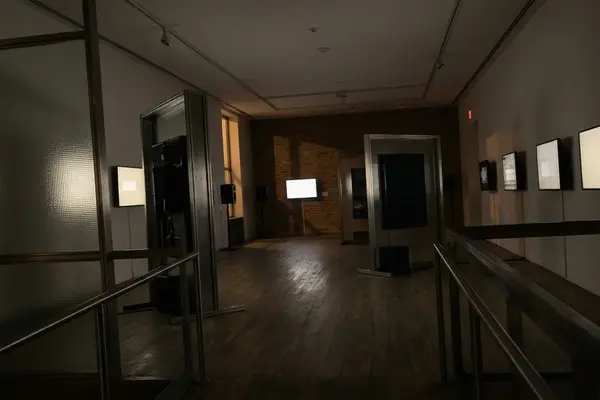
Bottom Line: The future of experimental transmission lies in site-specific broadcasts rather than only gallery playback or online release.